JIO MOVIES

Saturday, March 28, 2020

New world news from Time: Coronavirus Prevention Measures Turn Violent in Parts of Africa as Nations Go Into Lockdown


(JOHANNESBURG) — Police fired tear gas at a crowd of Kenyan ferry commuters as the country’s first day of a coronavirus curfew slid into chaos. Elsewhere, officers were captured in mobile phone footage whacking people with batons.

Virus prevention measures have taken a violent turn in parts of Africa as countries impose lockdowns and curfews or seal off major cities. Health experts say the virus’ spread, though still at an early stage, resembles the arc seen in Europe, adding to widespread anxiety. Cases across Africa were set to climb above 4,000 on Saturday.

Abuses of the new measures by authorities are an immediate concern.

Minutes after South Africa’s three-week lockdown began Friday, police screamed at homeless people in downtown Johannesburg and went after some with batons. Some citizens reported the police use of rubber bullets. Fifty-five people across the country were arrested.

In an apparent show of force on Saturday, South Africa’s military raided a large workers’ hostel in the Alexandra township where some residents had defied the lockdown.

In Rwanda, the first country in sub-Saharan Africa to impose a lockdown, police have denied that two civilians shot dead Monday were killed for defying the new measures, saying the men attacked an officer after being stopped.

And Zimbabwe, where police are widely criticized by human rights groups for deadly crackdowns, is set to enter a three-week lockdown on Monday. The country’s handful of virus cases already threatens to overwhelm one of the world’s most fragile health systems.

Keep up to date on the growing threat to global health by signing up for our daily coronavirus newsletter.

In Kenya, outrage over the actions of police was swift.

“We were horrified by excessive use of police force” ahead of the curfew that began Friday night, Amnesty International Kenya and 19 other human rights groups said in a statement issued Saturday. “We continue to receive testimonies from victims, eyewitnesses and video footage showing police gleefully assaulting members of the public in other parts of the country.”

The tear gas caused hundreds of people trying to reach a ferry in the port city of Mombasa ahead of the overnight curfew to touch their faces as they vomited, spat and wiped away tears, increasing the chance of the virus’ spread, the rights groups said.

Even some health workers reported being intimidated by police officers as they tried to provide services after the curfew, the statement added.

Kenya’s interior ministry on Saturday replied to the criticism in a statement saying the curfew “is meant to guard against an apparent threat to public health. Breaking it is not only irresponsible but also puts others in harm’s way.”

Kenya’s government has not said how many people have been arrested. Because courts are also affected by virus prevention measures, all but serious cases will now be dealt with at police stations, the government has said. That means anyone detained for violating curfew faces time in crowded cells.

The Law Society of Kenya will go to court to challenge the curfew on the grounds that it is unconstitutional and has been abused by police, president Nelson Havi said in a statement. The penalty for breaking a curfew is not corporal punishment, he added.

“It is evident that COVID-19 will be spread more by actions of police than of those claimed to have contravened the curfew,” Havi said.

If Kenya goes further and imposes a lockdown, “there is bound to be violence,” said James Shikwati, an economist. People in poor neighborhoods of cities like the capital, Nairobi, will need a way to access food, water and sanitation.

“It will mean for the first day, maybe, they stay indoors,” he said. “Then the second day, when they are hungry, they will move out.”

___

Tom Odula in Kenya and Nqobile Ntshangase and Jerome Delay in Johannesburg contributed.

Please send tips, leads, and stories from the frontlines to virus@time.com.

New world news from Time: U.N. Chief Antonio Guterres: Misinformation About COVID-19 Is the New Enemy


(UNITED NATIONS) — U.N. Secretary-General Antonio Guterres said Friday the world is not only fighting the “common enemy” of the coronavirus “but our enemy is also the growing surge of misinformation” about COVID-19 disease.

To overcome the virus, he said, “we need to urgently promote facts and science” and “promote hope and solidarity over despair and division.”

Guterres said the U.N. is launching a COVID-19 Communications for Solidarity Initiative to rapidly inform people about the facts and science, “and promote and inspire acts of humanity around the world.”

The U.N. chief also urged all nations “to stand up against the increase in hate crimes targeting individuals and groups perceived to be associated with the coronavirus.” He didn’t identify any targets but Asians, and especially ethnic Chinese, have reported being singled out for attacks.

Miguel Moratinos, head of the U.N. Alliance of Civilizations, and Adama Dieng, the U.N. special adviser on the prevention of genocide, issued a joint statement Thursday expressing grave concern at the increase in stigma, hate speech and hate crimes over the pandemic.

“We are all facing the same enemy, one which is invisible, rapidly advancing, taking lives away and causing havoc indiscriminately,” they said. “But allowing it to tear apart the fabric of our societies is perhaps one of the most serious upheavals that the COVID-19 pandemic is inflicting upon our world.”

Keep up to date on the growing threat to global health by signing up for our daily coronavirus newsletter.

Guterres also urged countries to help achieve a positive response to his call for warring parties everywhere “to silence the guns and instead to help create corridors for life-saving aid and open precious windows for diplomacy.”

The secretary-general called for countries to respond generously to the U.N. humanitarian appeal for $2 billion to fund the fight against COVID-19 in the world’s poorest countries.

“We must come to the aid of the ultra-vulnerable — millions upon millions of people who are least able to protect themselves,” Guterres said. “Recovery must address the inequalities, including gender inequalities, that are leaving so many more people vulnerable to social and economic shocks.”

He spoke at the first joint video briefing for the 193 U.N. member nations that also included the presidents of the Security Council, General Assembly and the Economic and Social Council as well as a question and answer session. The video failed for about 10 minutes while the secretary-general was speaking, but then resumed.

Please send tips, leads, and stories from the frontlines to virus@time.com.

Friday, March 27, 2020

New world news from Time: How Can You Safely Grocery Shop in the Time of Coronavirus? Here’s What Experts Suggest


As coronavirus spreads globally, grocery shopping has become one of the most anxiety-producing but necessary activities for millions of people around the world.

With many governments enforcing shelter-in-place orders in an attempt to stem the spread of COVID-19, the disease caused by the novel coronavirus, heading to the store for food and essential supplies has become one of the only times many people leave their homes. Prepping for the trip can feel overwhelming: Should you wear gloves or a mask? Should you wipe down that tomato? What’s the safest way to pay?

To answer these questions and more, TIME reached out to the U.S. Centers for Disease Control and Prevention (CDC) and other public health experts about what steps you can take to protect yourself and those around you while grocery shopping. Here’s what to know.

Is it better to order groceries online or go to the store?

If you can afford to, it’s best to order food online, experts say. Delivery services dramatically reduce your contact with other people: you pay online, it’s packaged elsewhere and the food is left outside your door.

“I’ve heard there are wait times, but if you can use that option it would definitely be better than going out,” says Dr. Joshua Petrie, an assistant research professor of epidemiology at University of Michigan’s School of Public Health.

A spokesperson for the CDC also tells TIME in an email that ordering online can be a good alternative for high-risk people. She adds, “And if you have any symptoms of illness, please stay home to protect your own health, as well as the health of others.”

However, as Dr. Craig Hedberg, a professor in the environmental health sciences division of the University of Minnesota’s School of Public Health, writes in an email, “[You] are still relying on the health and hygiene habits of the people who assemble your order and deliver it.”

A spokesperson for the CDC tells TIME that “[currently] there is no evidence to support transmission of COVID-19 associated with food or food packaging.” However, you should always wash your hands before and after handling food. The CDC also recommends you wash your hands again after you unload your groceries, and clean kitchen surfaces like countertops, cabinet handles and light switches.

What are the best ways to practice social distancing at the store?

Many people have no choice but to visit a grocery store in person. Dr. Lauren Sauer, an assistant professor of emergency medicine at Johns Hopkins University School of Medicine, says your primary concern while shopping should be the risk of contracting the virus from other people, not from food or surfaces in the store. While there’s a chance the virus could be transmitted on a surface, “you’re most likely to get this from another person,” she explains.

So try to maintain a distance of at least six feet from other people, the CDC spokesperson says. Sauer also adds that it’s incumbent for people to “take responsibility” to social distance, as “not everyone is going to be respectful of that six feet.” If you see a crowded aisle, skip it or wait for people to leave.

“Avoid racing to get the last of an item on the shelf. Follow guidelines that may be posted at the store. Be patient,” Hedberg writes.

Standing so far apart from people might feel uncomfortable, Dr. Jessica Justman, an associate professor of medicine in epidemiology at Columbia University, warns. People in the U.S. tend to have conversations two or three feet apart, she explains, so doubling that can feel alien. Still, it’s necessary right now.

Sauer suggests shopping at a store that’s already enforcing social distancing, such as requiring people to stand six feet apart in line or only allowing a certain number of customers in at once. Many national chains have announced precautions they’ll be taking moving forward, and you can also call your local store and ask ahead before you leave the house. “You want to pick a store that’s really paying attention and making it safer for customers to go in,” Justman says.

Sauer also suggests that, when possible, leave your kids and other family members at home. It’s probably safest if only one person in each household does all the shopping, not only because it lowers the household’s exposure but also because it reduces the total number of people in stores, she says. “We don’t really understand how kids transmit the virus,” Sauer adds. “It could be that little kids are sick and we just don’t know, so you want to reduce their interaction more broadly.”

And definitely don’t go to the store if you’re feeling sick, Petrie stresses. Ask someone else to go for you.

What are the best ways to safely touch things in the store?

While you should be most concerned about the other people in the store, the virus can also live on surfaces, says Dr. Christopher Gill, an associate professor of global health at the Boston University School of Public Health. It’s possible someone who is infected coughs, and droplets containing the virus land on a surface that you then touch. A March 17 study in the New England Journal of Medicine found that the virus could live for two to three days on plastic and stainless steel, up to 24 hours on cardboard, and up to four hours on copper.

So it’s best to be cautious. A spokesperson for the CDC recommends people clean their shopping cart or basket—specifically the handles and other surface areas—either with their own disinfectant wipes or wipes provided by the store. (Many stores have already started providing wipes near the carts.)

Sauer recommends bringing hand sanitizer to the store if it’s available to you, and using it after every time you come in contact with “high touch surfaces” — like cart handles.

Gill says you should assume the virus has gotten on surfaces around the store, so try to touch as few things as possible, and avoid touching your nose, face and mouth. Hedberg also suggests placing raw food in a bag “to prevent direct contact with the cart.”

Sauer also recommends using a paper shopping list, rather than your phone, while you’re in the store. You can throw the list away when you’re done, and it doesn’t risk transferring viral particles to your phone. “The less you can touch your personal items in public spaces, the better,” she explains. She also suggests using hand sanitizer the moment you leave the store—especially before you get in the car and touch the steering wheel.

Then, make sure to wash your hands as soon as you can. The CDC spokesperson recommends people wash their hands with soap and water “for at least 20 seconds before and after shopping.”

Keep up to date with our daily coronavirus newsletter by clicking here.

Should people wear a mask or gloves to the store?

If you’re sick and have to leave your house—which experts strongly advise against—you should wear a mask to stop the spread of infectious droplets.

But what if you’re not sick? The CDC currently does not recommend people wear gloves or a face mask in public unless they “have been exposed and are displaying symptoms of the virus,” according to an agency spokesperson

Personal protective equipment like gloves or masks can give people “a false sense of security,” Sauer explains. You might be less determined to not touch your face or wash your hands. “You [also] have a higher risk of exposing yourself to something if you take the gloves and mask off wrong,” she adds.

Hedberg writes that wearing a mask will “do little to prevent you from exposure to a virus” if you are near people who are infected.

While gloves stop the virus from getting on your skin, they don’t stop you from touching the cart handle then touching your face, which could transmit the virus. The best thing you can do to protect yourself is not touch your face, use hand sanitizer and wash your hands as soon as possible, Gill says.

Petrie also points out that gloves and masks are much more necessary for healthcare workers, and “there’s already lots of shortages of those sort of supplies in our hospitals where they’re really needed.”

“I don’t think [gloves or masks] would reduce your risk enough to warrant using them,” he says.

How can you pay safely?

You want to minimize your contact with other people as much as possible, experts say. If you can go cashless, go cashless. Something like Apple Pay, where you just tap your iPhone, is a good option because you don’t have to exchange your credit card, Sauer says. While you should try to keep your phone out of your hands as much as possible while shopping, she says using something like Apple Pay is a “trade off” because it’s better to have as little contact with the cashier as possible.

If you don’t have a mobile payment service, Dr. Jonathan Fielding, a professor of health policy and management at the University of California Los Angeles’s School of Public Health, says the next best option is a credit or debit card that’s “wiped clean both before and after use.”

If you have to use cash, the CDC spokesperson recommends you “thoroughly wash your hands after handling [it].”

Sauer also suggests you try to keep as much distance as possible between yourself and the cashier. “It’s less about the surfaces and more about how close in contact you are with the people,” she explains. Cashiers don’t have the freedom to move around like shoppers do, so be mindful to make space for them, she adds.

Hedberg also suggests using self-service checkout, which reduces contact with a cashier. “However you pay, wash your hands,” he adds.

Should you wipe down all items when they get home?

Experts tell TIME it’s not necessary. “You want to keep those cleaning supplies for when you really need them,” Sauer explains. Certain containers, like cardboard boxes, also can’t be decontaminated with just a wipe because they’re porous, she adds. Instead, Sauer recommends prioritizing using your cleaning supplies on “high touch surfaces,” like shopping cart handles. Hedberg also advises being careful to not wipe hazardous chemicals on food. “Using bleach on packaging materials or foods may create more problems than it could theoretically solve,” he writes in an email.

The CDC also does not recommend wiping down grocery items at home. “Currently there is no evidence to support transmission of COVID-19 associated with food or food packaging,” the CDC spokesperson writes. However, she adds that people should make sure to wash their hands as soon as they get home, especially before eating or preparing food. If soap and water is not available, use hand sanitizer with at like 60% alcohol, she says.

Just make sure to wash your fruits and vegetables like you normally would. If you want to be extra thorough, Fielding suggests using a vegetable brush, and to clean it between using on each individual piece of produce.

Once you’ve unpacked your groceries, you should clean your hands again, the CDC spokesperson says. You should then clean your kitchen surfaces, including countertops, cabinet handles, and light switches. “You should try to clean these surfaces often,” she writes.

When is the best time to visit the grocery store?

Many stores have set aside certain hours just for high-risk individuals, such as senior citizens or people who are immunocompromised. Sauer says that “first and foremost” you should respect those hours, which are meant to protect vulnerable individuals who have no other option but to go to the store.

If you belong to this high-risk category, look up what stores around you have these special hours, Fielding says. When possible, have friends or family go to the store for you, Sauer adds.

If you’re not in a high-risk category, consider shopping at “off-peak hours” to avoid crowds, the CDC spokesperson suggests. These times will depend on where you are. Early in the morning or late at night can often be less crowded. Hedberg suggests calling ahead to ask, or using an online guide to track periods of activity.

How often should you go grocery shopping?

Go as infrequently as possible without resorting to hoarding behavior, experts say. There is plenty of food in storage facilities around the U.S., it’s been reported, so it’s more a matter of getting it off those shelves and into stores. Hoarding is unnecessary and risks taking supplies away from people who need them.

But in general, try to stay home as much as possible. Justman suggests going to the store once a week, or even every few weeks if that’s a financial option. Sauer points out that going as rarely as possible not only reduces your risk of exposure, but also helps reduce the number of people in the store.

Still, make sure you always have enough food to provide safe and nutritious meals for your whole household, Hedberg stresses. Eating well is a crucial component of staying healthy, even if getting that food can feel stressful.

“Every shopping outing has some risk,” Fielding writes. “So grocery shop as infrequently as possible and practical.”

Please send any tips, leads, and stories to virus@time.com.

New world news from Time: I’ve Seen Wars and Epidemics Unfold. But Now That I Have an Immunocompromised Partner, the Coronavirus Makes Me Truly Scared


At midnight on Thursday March 26, all of South Africa went into lockdown. For the next 21 days, no one is to leave their homes unless they are going to the grocery store, the pharmacy or to seek medical help. No dog walking, no jogging, no food delivery services. Only essential workers are exempt, and that list is small. When President Cyril Ramaphosa made the announcement on March 23, a week after shutting the nation’s schools, there were only 402 confirmed COVID-19 cases. But it was essential, he said, to “flatten the curve” before widespread outbreaks overwhelmed the country’s fragile medical system. By the time the lockdown went into effect, three days later, the number of cases had more than doubled. For most South Africans living paycheck to paycheck (if they have one at all) in small, multi-generational homes, the lockdown is a brutal, but necessary, blow. For the nation’s elites, insulated by yards, well-stocked pantries, and live-in staff, it is an inconvenience. For me, it is a relief.

My husband is in the category of people most vulnerable to COVID-19, the kind that the U.K. government suggests should stay at home for the next 12 weeks. He is far younger than the 75-year-old cutoff for eschewing all social contact, but he has a chronic disease, and is immunocompromised. But when no one else in our social group was taking precautions, it felt ridiculous to seriously follow the recommendations to stay home, and avoid family members who don’t.

Instead, we tried to compromise. “Contact tracing” for us wasn’t about figuring out who had been exposed to infected people; it was mentally tracking physical touch in areas where anyone could have been infected. If I wear plastic gloves to push the ticket button in the grocery store parking garage, should I change them before touching my steering wheel again? Do I disinfect my hands before or after touching the elevator button? What surfaces do my reusable grocery bags come into contact with at the shops, and what do they bring home to my kitchen counter?

Our extreme germ avoidance measures are messing with longstanding routines: yesterday at the pharmacy, my husband misplaced the receipts for his prescriptions in the flurry of disinfecting his hands, swabbing the credit card with alcohol, and removing the gloves he wore while shopping before he inadvertently touched his face. But the insurance company won’t reimburse us if we don’t have a receipt. Is it worth $530 to go back to the pharmacy—already crawling with potentially infected snifflers and coughers—to plead for a replacement?

Now with the lockdown, I can lay my anxieties to rest. Neither of us will be leaving the house anytime soon. At least until groceries run low.

Keep up to date with our daily coronavirus newsletter by clicking here.

T takes eight different medications, four times a day
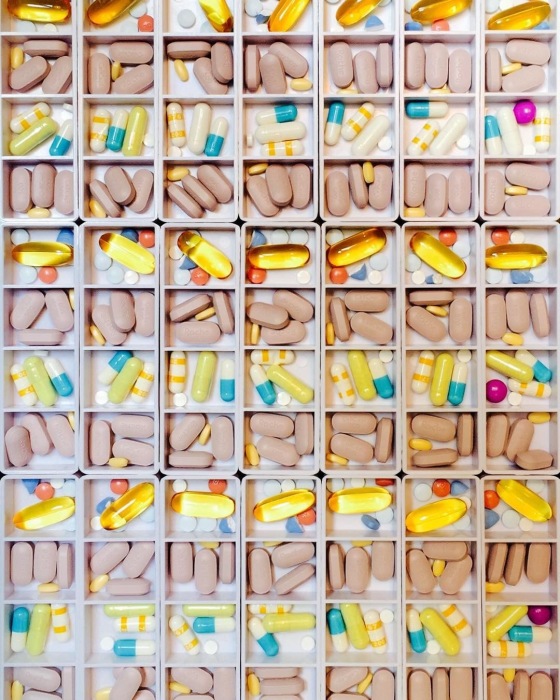
Aryn BakerAryn Baker’s husband takes eight different medications, four times a day. One is a powerful immunosuppressant, another is an anti-malarial that may help in COVID-19 care.

Nearly five years ago my husband started complaining of low energy, then a tingling in his feet and hands. His fingers swelled up like sausages, and a few weeks later they curved into inflexible claws. His skin began to harden; when I wrapped my fingers around his arms, it felt like I was holding a wooden baseball bat. The edges of his lips and eyes thickened into raised white ridges. After a few false starts, we finally got a diagnosis: scleroderma, a rare autoimmune disorder that tricks the immune system into attacking the body’s soft tissues with excess collagen. It wasn’t just his skin that was at risk of hardening, but also his internal organs.

There is no cure for scleroderma, but immunosuppressants, along with an arsenal of steroids, anti-inflammatories and, weirdly, a common anti-malarial, can slow its progression. Not long after his diagnosis, T’s doctor told him that while life expectancy with scleroderma is low, those who made it past five years could expect a reasonable quality of life, with constant monitoring. T asked him if that meant he would be able to go off the medications, or if his energy would return. His doctor said he didn’t know; none of his patients had made it that far. In the meantime, he prescribed deep tissue massage to soften his skin, weekly physical therapy, regular visits and twice-yearly scans of all his internal organs to check for unseen hardening.

The four years since T’s diagnosis have revolved around regular visits with the gastroenterologist, the pulmonologist, the cardiologist, the ophthalmologist, the rheumatologist and the psychiatrist. Twice a week, he meets with a physical therapist who keeps his hands from reverting to the claws characteristic of the disease. He greets by name the staff at the hospital where he has gone three times in as many years to patch bleeding capillaries in his stomach wall—another symptom of the disease. At the pathology clinic he knows to ask for the only nurse who is able to find a vein through his thickened skin in order to draw blood. As Americans living in South Africa, we see his medical team more often than our own family. Cape Town’s hospitals are more familiar now than the streets where we grew up.

Now, that routine has been ripped away. Even before the lockdown, when coronavirus was more rumor than fact in South Africa, T’s doctors and physical therapist warned him to be careful, worried that his compromised immune system would put him at greater risk. Now we are more worried about them. For weeks, masks and hand sanitizer were impossible to find, and while both have trickled back onto the market, we need only to look to Italy and the United States to see South Africa’s future, where doctors and nurses are overwhelmed and under protected.

When the first cases appeared in South Africa, we weren’t particularly worried about a drug shortage. T’s drug regime, eight different medications, taken four times a day—didn’t include anything that would traditionally be used in treating a flu epidemic. Then President Donald Trump started touting, prematurely, the antimalarial hydroxychloroquine as a cure. Prescribed off label for rheumatoid arthritis, it’s one of the key elements of T’s treatment. There was a rush to stockpile, and India, one of the main producers, banned its export. T has enough to last the next month, but if hydroxychloroquine does turn out to be effective in treating COVID-19, it’s not clear if he will be able to get more. And even if he can, does the fact that he has been on it for the past four years make it less effective if he is then infected by virus?

When we got married, my husband and I had a deal. I would work, and he would manage the household and the childcare. It was an agreement that played to our strengths. I hate driving, grocery shopping, school pickups and running errands. When I’m not out on assignment, I could easily pass a week without leaving the house. T needs to get out. He craves social interaction, even the kind that comes from running routine errands. Now that every shopping cart or pharmacy pick up line is a possible vector of the disease, our roles are reversed. “This is the first time where I really feel like I’m disabled,” he told me the other day as I unloaded the groceries from the car.

In the first few months after his diagnosis, T often fell into a downward spiral of Dr. Google prognoses, reading out loud worst-case scenarios and scrolling through images of scleroderma-induced disfigurement. Now he reads how doctors in Italy, unable to treat everyone, have had to ration care for those who are most likely to survive, while letting others die. He wonders if he might be considered one of the lost causes.

As a correspondent based in Hong Kong in the early 2000s, I covered the SARS epidemic, and then bird flu. I spent several weeks in Liberia at the peak of the Ebola outbreak. I’ve reported on cholera, malaria, scabies and Zika. Diseases don’t scare me. But the idea of my husband being exposed to COVID-19 is paralyzing. Suddenly, the hospitals and doctor’s offices that have been a source of healing and comfort for the past four years are now a threat. The immunosuppressants T takes to control the scleroderma leave him vulnerable to any kind of infection. The coronavirus would have a field day in his scarred and vulnerable lungs. If his stomach starts bleeding again, we will have to weigh the risk of infection against the need for surgery. That is, if there is even room in the hospital at that point. We all have our Dr. Google driven downward spirals. Only this time, it comes from simply reading the news.

Please send any tips, leads, and stories to virus@time.com.

New world news from Time: ‘You Must Wash Properly.’ Newspaper Ads From the 1918 Flu Pandemic Show Some Things Never Change


As governments and societies across the world struggle with the ongoing COVID-19 pandemic, and scientists look to modelling to see how various approaches might impact the worldwide trajectory of the virus, some observers are drawing comparisons to another pandemic that happened over a century ago. The so-called Spanish flu of 1918, which is thought to have claimed the lives of 50 million people worldwide, has been used as a reference point, showing how COVID-19 compares to other pandemics through history.

Last week, a 105-year-old man thought to be Spain’s last living survivor of the 1918 pandemic warned the world to “be careful” amid the coronavirus outbreak. “I don’t want to see the same thing repeated. It claimed so many lives,” José Ameal Peña told Spanish newspaper El Mundo.

While the 1918 flu and COVID-19 are different diseases, and much has changed in the world of medicine since then, newspaper advertisements from 1918 show that, in some ways, the two moments are strikingly similar.

“We say that history is in cycles and that history repeats itself, and for this it’s exactly the same in several aspects,” says Elisabeth Zetland, a researcher at MyHeritage, which has a database of 11.9 billion searchable historical records, including newspapers, largely specializing in family history. (The newspapers are searchable here.) In early March, as the coronavirus started spreading rapidly, Zetland searched for “Spanish flu” in MyHeritage’s historical newspaper collection. “What struck me were the similarities,” she says, “and I was not expecting them to be so strong compared to now.”

Courtesy of MyHeritage.com

While medicine has advanced and access to information has increased significantly since 1918, there are some parallels in the messaging and advice given to the public. Although the healthcare system in 1918 was more fragmented and disparate across the U.S. than it is now, authorities then understood enough to know that people should stay away from each other due to the highly contagious nature of the flu. A lack of vaccine at that time meant that public health efforts worldwide were focused on personal hygiene, quarantines and limiting public gatherings.

The emphasis on washing hands frequently, avoiding crowds and wearing masks was recurrent in newspaper records of the time, as was disdain for people flouting the rules. One advertisement for the Red Cross from the Berkeley, Calif., Daily Gazette in October 1918, backed by county authorities and the board of health, said that gauze masks were “99% proof against influenza,” and that anyone not wearing a mask was a “dangerous slacker.”

In 2020, the recommendations are different in the U.S.—health experts at the Centers for Disease Control and Prevention advised healthy people against wearing face masks, which are now in short supply. But in other countries, particularly in Asia, wearing masks is a cultural norm and is recommended by health professionals to help slow the spread of disease.

As is the case today, there was a shortage of masks in 1918 and, according to Zetland, several newspaper records advised people on how to make their own masks. Today, while it’s widely acknowledged that homemade masks do not prevent the spread of disease the way N95 respirator masks do, many people are likewise sewing DIY versions.

Courtesy of MyHeritage.com

Commercial advertisers quickly cottoned on, marketing their products to educate the public about the growing pandemic. Hygiene conditions in the battlefields of World War I during the final year of the war were appalling, and the war had drained much of the nation’s medical resources. The outbreak was first identified in the U.S. in military personnel in Spring 1918, and outbreaks within states were often traceable back to Army military bases and hospitals, such as in Minneapolis.

Cramped living conditions in urban centers across the U.S. in the early 20th century created ideal situations for transmission of the virus. To educate the public about hygiene, as well as market their product, Lifebuoy Soap purchased a series of advertisements in newspapers across the U.S. in November 1918. The ads acted as a public-health notice explaining to people exactly why washing their hands was important, and how their soap would leave skin “antiseptically clean.” Today, the importance of hand-washing is once again a refrain.

Courtesy of MyHeritage.com

In some cases, businesses took advantage of public fears and desperation about the crisis, even when their products didn’t seem relevant. Some advertisers touted their products as recommended by doctors or backed by science, even when the products, such as Horlicks Malted Milk, had little or nothing to do with medicine. One ad, from a massage parlor in San Jose, Calif., outright promised that their treatments were “guarantee to cure Spanish Influenza.”

Courtesy of MyHeritage.com

“People used remedies then that it’s funny to read about now,” says Zetland, who notes that one particular remedy kept recurring while she was researching. “You were meant to cook 12 onions, get the juice and drink it the day afterwards, and that would protect you from the flu.” Today, misinformation about the coronavirus and the best ways to prevent infections — including, for example, debunked claims that blasting the sinuses with hot air can kill the virus — have spread rapidly on social media.

Other products carried a “no influenza guarantee,” as an advertisement for a bicycle in the Calgary Herald shows, with its promise that the bikes would arrive germ-free. The same newspaper carried an ad from an insurance company offering a “Special Sickness Policy” covering Spanish influenza. More than 100 years later, some businesses have used the same messaging. In early March, several AirBnB listings in the U.S. promised “coronavirus-free” getaways for travelers seeking to “escape” the virus.

Courtesy of MyHeritage.com

Historians have credited the 1918 flu with revolutionizing public healthcare systems across the world, but it seems perhaps not as much has changed in the world of advertising.

On social media, journalists have documented PR pitches received in recent weeks that seem to have a coronavirus-related spin, or be tied to news of the pandemic, even when the products themselves don’t appear to be directly relevant to the health crisis.

“Advertisers back then did follow the movement,” says Zetland, “just like they do today.”

New world news from Time: Isolation Helped These Islands Delay a COVID-19 Outbreak. Now, Being Remote Could be Their Biggest Problem


When it comes to riding out a pandemic, Pebble Island is a pretty safe place to be. Part of the remote Falklands archipelago in the south Atlantic, Pebble is home to just two families — with a total population of six — says Riki Evans, owner of the Pebble Island Lodge. With none of them displaying symptoms of COVID-19 and travel between the Falkland Islands now heavily restricted, Evans says they’re not worried about the isolation of the months ahead. “It doesn’t make much difference to us. We’re used to being out here on our own. And we’re safe.”

In the early stages of the COVID-19 pandemic, isolation has been a boon to the Falkland Islands, the overseas British territory 400 miles off the coast of Argentina. The windswept archipelago — consisting of two main islands, and over 700 smaller islands — is famous for the 10-week war the two countries fought over possession of it in 1982, and for the tens of thousands of penguins that live there. Thanks to its remoteness, the community of a little over 3,000 people has managed to stay well behind the steep trajectories that other countries’ outbreaks have followed; officials estimate that the Falklands are lagging three or four weeks behind the U.K.

But the islanders know that in the event of a large outbreak, isolation could become their biggest problem. Almost a sixth of the islands’ inhabitants are considered high risk, because they’re elderly or have underlying health conditions. While there are no confirmed cases of COVID-19 in the Falklands, officials confirmed Thursday that a child is critically ill with a suspected case. There are no facilities to test for the virus on the Falklands, and it takes around 10 days to get test results back from Britain, which is almost 8,000 miles away. Travel disruption has affected Falklanders who regularly go to the U.K. for medical purposes or education. And Chile and Uruguay, which normally take in emergency medical evacuations from the Falklands, have restricted entry for foreigners, meaning all health issues must be treated at the well-resourced but small local hospital in Stanley, the small-town capital. The islands, which import almost everything other than meat, wool and fish, could also be vulnerable to global supply chain shocks.

The Falklands government has moved quickly this week to implement social distancing measures, telling schools and daycares to close and asking everyone but non-essential workers to stay home. The most vulnerable have been asked to stay in their homes for 12 weeks. Travel between the islands, which make up an area almost the size of Connecticut, is now heavily restricted. And anyone arriving in the Falklands from elsewhere must self-quarantine for 14 days.

Given the risks, some in the Falklands community had pushed for their leaders to take stronger action to close the territory’s borders, as many countries have done, says Leona Roberts, a member of the Falkland Islands Legislative Assembly, the equivalent of the local parliament. “It was a very tough question. But the chances of keeping [the virus] out indefinitely were so slim and the disadvantages to our people are huge,” she says. “We can’t keep the drawbridge up forever.”

Keep up to date with our daily coronavirus newsletter by clicking here.

Connections cut

The COVID-19 pandemic poses an unprecedented challenge to the travel links that the remote Falklands have become used to since 1985, when the British air force built a runway and began regular flights between the U.K. and the Falklands as part of the deepening British military presence there after the war. These days there are around two flights a week to Chile, Brazil or Argentina, and two flights to the U.K., operated by the British defense ministry.

The flights to Latin America are no longer happening, and the U.K. flights have been disrupted in March, Roberts says, as border closures around the world left the defense ministry planes with nowhere to stop to refuel on the long journey. That meant the Falklands were unable to send coronavirus tests to labs in the U.K. It also left a group of around 20 high schoolers, who are in the U.K. for their final years of secondary education, stranded away from their families.

The air link was finally re-established early this week, Roberts says, allowing the Falklands to send a batch of tests to the U.K. But they aren’t expecting the results until early April, with the delay leaving the islands “playing catch up”, according to the Falklands’ chief medical officer Becky Edwards.

On Monday, Argentina’s government said it had reached out to the British ambassador in Buenos Aires to offer material support to islanders, including “fresh food, medical supplies or tests to detect the virus causing COVID-19, as well as any necessary humanitarian flights and medical care in Argentina for those infected.” Daniel Filmus, the Argentine minister for matters related to “Las Malvinas” as the South American country calls the Falklands, added that the islands “are part of our national territory so it’s our responsibility to express our solidarity with their inhabitants.”

Falklanders, who voted almost unanimously to remain part of the U.K. in a 2013 referendum, aren’t too interested in Argentina’s help. “What we saw coming from Argentina was very much couched in political language,” Roberts says. “That makes it very difficult to look at this as a humanitarian offer.” She added that the U.K. has committed to supporting the islands during the pandemic, including with help procuring medical equipment.

Community response

Mostly, Falklanders have been relying on their tight-knit community to get through the pandemic. When the local government began to introduce social distancing measures to prevent the spread of the virus in mid-March—far earlier in the cycle of the outbreak than most Western countries—islanders responded well, Roberts says. “As a politician I know 90-95% of the people on these islands, so people tend to trust that we have their best interests in mind.” Businesses have shut down voluntarily to prevent public gatherings, while the local museum closed to protect its high-risk staff. People have avoided panic buying, knowing there’s a limit to how much the shops can provide. Almost everything other than wool, fish and meat is dependent on visits from cargo ships a couple of times a month.

Mike Summers, who runs the islands’ sports association, says no one has grumbled about the suspension of football, rugby, badminton and basketball, both to limit the spread of the virus and to avoid sports injuries that would require now-impossible medical evacuations.

Summers says that living in a small community makes people less inclined to flout government advice on the coronavirus, as some have done in the U.K., where images of crowded public spaces caused outrage last weekend. “Here in [the Falklands] we know all of the old and vulnerable people who might potentially die from this thing,” Summers says. “They’re our friends—the people we mix with on a daily basis, and nobody wants to put any of them at risk.”

Roughly 500 people on the islands are considered high risk, and a further 200 are medium risk, Roberts says. The hospital has seven ventilators—needed to treat severe cases of COVID-19—and 18 acute care beds. Proportionally, those numbers are far better than in the U.K. But there is still a risk that the isolated health system could be overwhelmed in the case of a fast-spreading outbreak.

Economic risk

The islands’ small economy is also vulnerable to global market crashes sparked by the pandemic. The Falklands are economically self-sufficient and fairly wealthy, largely thanks to a significant fishing industry, which contributes 50-60% of GDP. International commercial fishing vessels pay for licenses to use the islands’ waters. For now, the boats are still coming. Much will depend on how long international travel disruption lasts, Roberts says. The large agricultural sector will likely suffer in the long term if global prices of wool and meat fall.

The effect on tourism, which brings more than 60,000 people to the islands each year, mostly on cruise ships, is limited so far because the tourist season of November to March was already winding down when countries around the world started warning their citizens to avoid travel. “We lost a few thousand pounds from cancellations, but nothing too drastic,” Evans says of Pebble Lodge.

In the short term, as Falklanders begin to stay home from work, the local government has promised to step in to keep businesses running with a package of measures announced Wednesday. Employers and the self-employed will both be able to claim up to $1,528 for a 14-day period that they or their staff have to take off.

As islanders ramp up their response to the virus, isolating themselves from one another in an already isolated place, they are hoping that they have learned lessons from watching the pandemic unfold across the rest of the world. “We’ve seen on the television every day what’s happening elsewhere, and what can happen to your community if this thing gets out of control,” Summers says. “We’ll do whatever we can to avoid that.”

Please send any tips, leads, and stories to virus@time.com.

New world news from Time: The Coronavirus Is Prompting Middle East Regimes to Release Prisoners. But Journalists and Activists Remain Behind Bars


When Turkish writer and economist Mehmet Altan went for a medical check-up on his release from Istanbul’s Silivri prison in 2018, his doctor determined that he was severely anemic. Twenty-one months of incarceration had brought the 67-year-old’s iron levels so low, the medic examining him initially suspected he had sustained a wound and bled out.

Now recuperated, Mehmet is practicing social distancing to mitigate the risk of contracting the novel coronavirus that as of March 27 has killed more than 25,000 people and infected more than half a million globally. But isolating at home is not an option for his brother, the novelist and journalist Ahmet Altan. The brothers were arrested in September 2016 after Ahmet was accused by Turkish authorities of sending subliminal messages through the TV on the eve of a failed coup against Turkey’s President Recep Tayyip Erdogan. While Mehmet was released in 2018 following objections from the European Court of Human Rights, Ahmet remains in jail.

The acclaimed 70-year-old novelist shares a cell six steps long and four steps wide with two other inmates, and lives on the same diet that compromised Mehmet’s health. “I’m extremely worried about Ahmet,” Mehmet tells TIME in the deserted lobby of a hotel in Istanbul’s Beyoglu district. “For him to be held amid the coronavirus outbreak is equivalent to murder in my mind.”

In a bid to reduce the risk of COVID-19 outbreaks, justice ministries in at least four countries across the Middle East and North Africa (MENA) region have commuted jail terms or temporarily released prisoners. The cumulative scale of the release is unprecedented, dwarfing the numbers that escaped Muammar Gaddafi’s prisons during the Libyan revolution, or the militants that Syrian President Bashar Al Assad freed in 2011 to encourage them to fight U.S. forces in Iraq. But in many cases, political prisoners have been excluded from COVID-19 mitigation measures — to the outrage of human rights groups, who condemn the region’s broader move towards the criminalization and repression of free speech and expression.

“Every government should be looking at how they can empty out their prisons and reduce interactions between prisoners, especially those in group cells,” says Amnesty International’s MENA region director Heba Morayef. “The problem for a lot of the more repressive Middle Eastern governments is that they have become so used to using mass incarceration as a way to silence opposition. That actually places those countries more at risk than others.”

Egypt released scores of political prisoners this month, but tens of thousands remain detained for peacefully protesting. Bahrain released around 1,500 prisoners including some 300 political detainees, according to the Bahrain Institute for Rights and Democracy. But the rights group notes that several prominent political prisoners with pre-existing medical conditions remain behind bars. Iran says it has granted temporary release to 85,000 prisoners, including some political detainees. But jailed women’s right activist Nasrin Sotoudeh on March 16 began a hunger strike to demand the release of thousands more who remain incarcerated.

In Syria, which recorded its first coronavirus case on March 23 after weeks of denials from officials in Damasus, President Bashar Al Assad has issued an amnesty expected to provide for the early release of some criminal detainees—although the decree does not specify whether it is part of measures intended to halt the spread of COVID-19. In any case, the amnesty will not apply to unknown numbers of political prisoners in unofficial or secret facilities in the country, says Samer Aldeyaei, CEO and co-founder of the Turkey-based Free Syrian Lawyers Association. “Already, the main reason given by the government for a lot of prison deaths is health issues such as heart attacks,” Aldeyaei tells TIME. “[The pandemic] is a good excuse for the Assad regime to kill more people and say that they just died of the coronavirus.”

On March 23, a group of 40 human rights organizations expressed “grave concern” over the fate of prisoners in Middle East jails that are frequently cramped and unsanitary, and where the health of many detainees is already compromised.

Egypt’s prisons are especially notorious. Egypt does not allow independent inspection of its penitentiaries and has not disclosed how many people it detains, but detention centers remain dangerously overcrowded despite the construction of around 15 new facilities since 2015, according to Human Rights Watch. Inmates have reported having to sleep in rotational shifts on concrete floors and cells with a maximum capacity of 10 can hold up to 40 or 50 detainees.

At facilities such as Cairo’s Tora Maximum Security Prison, known as “the scorpion”, personal hygiene products such as soap, toothbrushes, and shaving kits are not provided to inmates, and basic necessities gifted by relatives have been confiscated. Abject conditions are standard throughout the penal system, where access to running water is not guaranteed, toilets are filthy, and emergency hospital visits require a warden’s permission regardless of the doctor’s opinion. “We have seen a lot of prisoners let die, although their diseases are manageable,” says Amr Magdi, a Middle East and North Africa researcher at Human Rights Watch. While he says the group does not want to give the impression it is calling for the release of violent offenders or those that pose a risk to society, “our position is first to release all those arrested for peacefully exercising their rights. We are talking about tens of thousands in Egypt and in Syria and hundreds in the Gulf countries.”

Some of these more autocratic governments are using the coronavirus as an opportunity, Magdi says, to “seek emergency powers and more normalization of persecuting free speech.” On March 18, Egyptian authorities arrested four prominent women activists as they protested to seek the release of unjustly detained political prisoners. Egypt has also forced a Guardian journalist to leave the country and censured the New York Times bureau chief after they cited a study that questioned the government’s figures on Egypt’s coronavirus cases. Turkey has also arrested at least seven journalists charged with “spreading panic” after they reported on deaths or new cases of coronavirus, according to Reporters Without Borders.

Turkey also announced last week it would expedite a legal amendment to make 100,000 prisoners, or about a third of its incarcerated population, eligible for early release, substituting prison time with alternatives such as house arrest. But the provision does not cover inmates on trial or sentenced for terrorism offenses or crimes against the state. Since 2016, Turkey has either placed in lengthy pretrial detention or sentenced thousands under terrorism charges without evidence they committed violent acts, incited violence, or provided logistical help to outlawed armed groups.

Ahmet Altan is among those ineligible for early release. “They’ve gone too far with my brother,” Mehmet says. “It’s insane that they’re going to let murderers back out on the streets but put the life of a novelist who wrote three articles the government didn’t like at risk from the coronavirus.”

Each morning in jail, he says, he would step into the courtyard behind his cell and shout out that he was not afraid of life; that life should fear him. Inmates in adjoining cells, whom he was forbidden from mixing with, would scream the phrase back to him. “Time slows down in prison but the brain goes in the opposite direction, it starts creating,” he says. “You can never confine a writer. Even if you detain their body, you can’t arrest their mind.”

New world news from Time: Afghanistan Faces a ‘Make-or-Break Moment,’ U.N. Chief Says

UNITED NATIONS — Warning that Afghanistan is facing “a make-or-break moment,” the United Nations chief on Monday urged the world t...