JIO MOVIES

Wednesday, January 1, 2020

New world news from Time: New Year’s Zoo Fire Kills More Than 30 Animals, Including Orangutans and Gorillas, in Germany


(BERLIN) — A fire at a zoo in western Germany in the first minutes of 2020 killed more than 30 animals, including apes, monkeys, bats and birds, authorities said. Police said the fire may have been caused by sky lanterns launched to celebrate the new year.

Several witnesses reported that they had seen the cylindrical paper lanterns with little fires inside flying in the night sky shortly after midnight Wednesday near the Krefeld zoo, Gerd Hoppmann, the city’s head of criminal police told reporters.

“People reported seeing those sky lanterns flying at low altitude near the zoo and then it started burning,” Hoppmann said.

Police and firefighters received the first emergency calls at 12:38 a.m.

The zoo near the Dutch border said that the entire ape house burned down and more than 30 animals, including five orangutans, two gorillas, a chimpanzee and several monkeys, as well as fruit bats and birds, were killed.

Only two chimpanzees could be rescued from the flames by firefighters. They suffered burns but are in stable condition, zoo director Wolfgang Dressen said.

“It’s close to a miracle that Bally, a 40-year-old female chimpanzee, and Limbo, a younger male, survived this inferno,” Dressen said, adding that many animal handlers were in shock at the devastation.

“We have to seriously work through the mourning process,” Dressen said. “This is an unfathomable tragedy.”

The zoo director also said than many of the dead animals were close to extinction in the wild.

The zoo said that in addition to the two rescued chimpanzees, the Gorilla Garden near to the Ape House didn’t go up in flames and that gorilla Kidogo and six other members of his family group are alive.

Criminal police officer Hoppmann said that the use of sky lanterns is illegal in Krefeld and most other parts of Germany and asked that the people who launched them or people who witnessed anything should come forward to police.

Germans usually welcome in the new year with fireworks at midnight and private persons are allowed to buy and launch fireworks. Sky lanterns, however, are both illegal and uncommon in Germany.

Sky lanterns, which are sometimes also called Chinese lanterns, are a sort of hot-air balloon made of paper. They have been used in Asia for celebratory events for centuries.

Hoppmann said investigators found some used lanterns on the ground that hadn’t burned entirely. They were 34 centimeters (13.4 inches) long, made out of white paper with an opening at the bottom where a small fire would have been suspended. The fire heats the air inside, making them fly and shine at night.

Hoppmann said some of the lanterns had handwritten notes on them.

The Krefeld zoo was opened in 1975 and attracts some 400,000 visitors each year. It will remain closed on Wednesday.

New world news from Time: U.S. Troops Fire Tear Gas at Pro-Iran Protesters Outside the Embassy Compound in Baghdad


BAGHDAD (AP) — U.S. troops fired tear gas on Wednesday to disperse pro-Iran protesters who were gathered outside the U.S. Embassy compound in Baghdad for a second day.

Dozens of pro-Iranian militiamen and their supporters had camped out at the gates of the embassy in Baghdad where they stayed the night, a day after they broke into the compound, trashing a reception area and smashing windows in one of the worst attacks on the embassy in recent memory.

The U.S. Marines guarding the embassy fired tear gas as more crowds arrived and after the protesters lit a fire on the roof of the reception area. Smoke rose from the building.

The protesters are angered by deadly US airstrikes that targeted an Iran-backed militia over the weekend, killing 25 fighters.

On Tuesday, dozens of Iraqi Shiite militiamen and their supporters broke into the U.S. Embassy compound in , smashing a main door and setting fire to a reception area in one of the worst attacks on the embassy in recent memory.

President Donald Trump blamed Iran for the attack and Defense Secretary Mark Esper later announced the immediate deployment of an infantry battalion of about 750 soldiers from the Army’s 82nd Airborne Division at Fort Bragg, North Carolina, to the Middle East. He did not specify their destination, but a U.S. official familiar with the decision said they will go to Kuwait.

New world news from Time: As Hong Kong’s Leader Pledges to ‘Listen Humbly,’ Protesters Return to the Streets


Hong Kong began 2020 with more protests as crowds marched through downtown districts on New Year’s Day to call for greater political freedom.

Local media reported that the city’s Victoria Park—the traditional staging ground for mass protests—began to fill up from the early afternoon. Marchers chanted “Liberate Hong Kong” and carried flags reading “Revolution Now.”

Scores of trade unions set up recruiting booths along the route in a bid to draw members from Hong Kong’s newly politicized youth. Many of the unions are new, having been set up to counteract the pro-Beijing labor federations that have long dominated the sector.

Wednesday’s procession came in the wake of a restive New Year’s Eve that saw hundreds protesters form human chains and others barricade Nathan Road—the Kowloon peninsula’s principal thoroughfare—sparking clashes with police. A train carriage was set on fire by masked radicals in the early hours of Wednesday, but nobody was injured. Radicals also hurled petrol bombs into a train depot.

The traditional New Year’s Eve fireworks at Victoria Harbour, which normally draw large crowds, were canceled after police voiced fears for public safety.

In a New Year message, Hong Kong’s top official, Chief Executive Carrie Lam, said that the semi-autonomous territory “experienced challenges not seen before” during many months of unrest and that “we all want to see an end to this predicament.”

She pledged to “listen humbly to find a way out,” and added: “We must handle the problems at hand and acknowledge the shortcomings in our systems, as well as the deep-rooted problems and conflicts that have been accumulating for many years.”

Meanwhile, a group of 38 political figures from several countries—including the recently retired speaker of the House of Commons John Bercow and former U.K. foreign secretary Malcolm Rifkind—wrote to Lam, urging her to set up a probe into the Hong Kong police force’s handling of the unrest, which opponents say has been heavy handed.

The group said: “Should you continue to reject this idea, we call on the international community to establish an international, independent inquiry mechanism.”

The Hong Kong government has maintained that the territory’s Independent Police Complaints Council (IPCC) must be allowed to complete its report on the protests before another inquiry is considered, but critics—including a panel of overseas experts—say that it cannot do its work because it lacks the power to subpoena witnesses and documents.

The Hong Kong protests, now in their seventh month, originated in popular opposition to plans to allow for fugitives to be extradited to mainland China for the first time. Detractors feared that Beijing would use the provision to round up dissidents in the enclave.

The early protests have since escalated into an increasingly violent struggle against the local administration, with protesters demanding a fully elected legislature and popularly elected leader for the former British possession, retroceded to China in 1997 after 156 years of colonial rule.

Nearly 6,500 people have been arrested since the start of the unrest.

New world news from Time: Trump Deploys More Troops to the Middle East After Embassy Attack


WASHINGTON (AP) — Charging that Iran was “fully responsible” for an attack on the U.S. Embassy in Iraq, President Donald Trump ordered about 750 U.S. soldiers deployed to the Middle East as about 3,000 more prepared for possible deployment in the next several days.

No U.S. casualties or evacuations were reported after the attack Tuesday by dozens of Iran-supported militiamen. U.S. Marines were sent from Kuwait to reinforce the compound.

Defense Secretary Mark Esper said Tuesday night that “in response to recent events” in Iraq, and at Trump’s direction, he authorized the immediate deployment of the infantry battalion from the Army’s 82nd Airborne Division at Fort Bragg, North Carolina. He did not specify the soldiers’ destination, but a U.S. official familiar with the decision said they will go to Kuwait.

“This deployment is an appropriate and precautionary action taken in response to increased threat levels against U.S. personnel and facilities, such as we witnessed in Baghdad today,” Esper said in a written statement.

Additional soldiers from the 82nd Airborne’s quick-deployment brigade, known officially as its Immediate Response Force, were prepared to deploy, Esper said. The U.S. official, who provided unreleased details on condition of anonymity, said the full brigade of about 4,000 soldiers may deploy.

The 750 soldiers deploying immediately were in addition to 14,000 U.S. troops who had deployed to the Gulf region since May in response to concerns about Iranian aggression, including its alleged sabotage of commercial shipping in the Persian Gulf. At the time of the attack the U.S. had about 5,200 troops in Iraq, mainly to train Iraqi forces and help them combat Islamic State extremists.

The breach of the U.S. Embassy compound in Baghdad on Tuesday was a stark demonstration that Iran can still strike at American interests despite Trump’s economic pressure campaign. It also revealed growing strains between Washington and Baghdad, raising questions about the future of the U.S. military mission there.

“They will pay a very BIG PRICE! This is not a Warning, it is a Threat. Happy New Year!” Trump tweeted Tuesday afternoon, though it was unclear whether his “threat” meant military retaliation. He thanked top Iraqi government leaders for their “rapid response upon request.”

American airstrikes on Sunday killed 25 fighters of an Iran-backed militia in Iraq, the Kataeb Hezbollah. The U.S. said those strikes were in retaliation for last week’s killing of an American contractor and the wounding of American and Iraqi troops in a rocket attack on an Iraqi military base that the U.S. blamed on the militia. The American strikes angered the Iraqi government, which called them an unjustified violation of its sovereignty.

While blaming Iran for the embassy breach, Trump also called on Iraq to protect the diplomatic mission.

“Iran killed an American contractor, wounding many,” he tweeted from his estate in Florida. “We strongly responded, and always will. Now Iran is orchestrating an attack on the U.S. Embassy in Iraq. They will be held fully responsible. In addition, we expect Iraq to use its forces to protect the Embassy, and so notified!”

Even as Trump has argued for removing U.S. troops from Mideast conflicts, he also has singled out Iran as a malign influence in the region. After withdrawing the U.S. in 2018 from an international agreement that exchanged an easing of sanctions for curbs on Iran’s nuclear program, Trump ratcheted up sanctions.

Those economic penalties, including a virtual shut-off of Iranian oil exports, are aimed at forcing Iran to negotiate a broader nuclear deal. But critics say that pressure has pushed Iranian leaders into countering with a variety of military attacks in the Gulf.

Until Sunday’s U.S. airstrikes, Trump had been measured in his response to Iranian provocations. In June, he abruptly called off U.S. military strikes on Iranian targets in retaliation for the downing of an American drone.

Robert Ford, a retired U.S. diplomat who served five years in Baghdad and then became ambassador in Syria, said Iran’s allies in the Iraqi parliament may be able to harness any surge in anger among Iraqis toward the United States to force U.S. troops to leave the country. Ford said Trump miscalculated by approving Sunday’s airstrikes on Kataeb Hezbollah positions in Iraq and Syria — strikes that drew a public rebuke from the Iraqi government and seem to have triggered Tuesday’s embassy attack.

“The Americans fell into the Iranian trap,” Ford said, with airstrikes that turned some Iraqi anger toward the U.S. and away from Iran and the increasingly unpopular Iranian-backed Shiite militias.

The tense situation in Baghdad appeared to upset Trump’s vacation routine in Florida, where he is spending the holidays.

Trump spent just under an hour at his private golf club in West Palm Beach before returning to his Mar-a-Lago resort in nearby Palm Beach. He had spent nearly six hours at his golf club on each of the previous two days. Trump spoke with Iraqi Prime Minister Adel Abdul-Mahdi and emphasized the need for Iraq to protect Americans and their facilities in the country, said White House spokesman Hogan Gidley.

Trump is under pressure from some in Congress to take a hard-line approach to Iranian aggression, which the United States says included an unprecedented drone and missile attack on the heart of Saudi Arabia’s oil industry in September. More recently, Iran-backed militias in Iraq have conducted numerous rocket attacks on bases hosting U.S. forces.

Sen. Tom Cotton, an Arkansas Republican and supporter of Trump’s Iran policy, called the embassy breach “yet another reckless escalation” by Iran.

Tuesday’s attack was carried out by members of the Iran-supported Kataeb Hezbollah militia. Dozens of militiamen and their supporters smashed a main door to the compound and set fire to a reception area, but they did not enter the main buildings.

Sen. Bob Menendez of New Jersey, senior Democrat on the Senate Foreign Relations Committee, blamed Iran for the episode and faulted Trump for his “maximum pressure” campaign against Iran.

“The results so far have been more threats against international commerce, emboldened and more violent proxy attacks across the Middle East, and now, the death of an American citizen in Iraq,” Menendez said, referring to the rocket attack last week.

By early evening Tuesday, the mob had retreated from the compound but set up several tents outside for an intended sit-in. Dozens of yellow flags belonging to Iran-backed Shiite militias fluttered atop the reception area and were plastered along the embassy’s concrete wall along with anti-U.S. graffiti. American Apache helicopters flew overhead and dropped flares over the area in what the U.S. military called a “show of force.”

The embassy breach was seen by some analysts as affirming their view that it is folly for the U.S. to keep forces in Iraq after having eliminated the Islamic State group’s territorial hold in the country.

A U.S. withdrawal from Iraq is also a long-term hope of Iran, noted Paul Salem, president of the Washington-based Middle East Institute.

And it’s always possible Trump would “wake up one morning and make that decision” to pull U.S. forces out of Iraq, as he announced earlier with the U.S. military presence in neighboring Syria, Salem said. Trump’s Syria decision triggered the resignation of his first defense secretary, retired Gen. Jim Mattis, but the president later amended his decision and about 1,200 U.S. troops remain in Syria.

Trump’s best weapon with Iran is the one he’s already using — the sanctions, said Salem. He and Ford said Trump would do best to keep resisting Iran’s attempt to turn the Iran-U.S. conflict into a full-blown military one. The administration should also make a point of working with the Iraqi government to deal with the militias, Ford said.

For the president, Iran’s attacks — directly and now through proxies in Iraq — have “been working that nerve,” Salem said. “Now they really have Trump’s attention.”

___

Associated Press writers Matthew Lee, Darlene Superville and Sagar Meghani contributed to this report.

New world news from Time: North Korea Warns That It Will Unveil a New Strategic Weapon Soon


SEOUL, South Korea (AP) — North Korean leader Kim Jong Un has accused the Trump administration of dragging its feet in nuclear negotiations and warned that his country will soon show a new strategic weapon to the world as it bolsters its nuclear deterrent in face of “gangster-like” U.S. sanctions and pressure.

The North’s state media said Wednesday that Kim made the comments during a four-day ruling party conference held through Tuesday in the capital Pyongyang, where he declared that the North will never give up its security for economic benefits in the face of what he described as increasing U.S. hostility and nuclear threats.

Kim’s comments came after a monthslong standoff between Washington and Pyongyang over disagreements involving disarmament steps and the removal of sanctions imposed on the North.

“He said that we will never allow the impudent U.S. to abuse the DPRK-U.S. dialogue for meeting its sordid aim but will shift to a shocking actual action to make it pay for the pains sustained by our people so far and for the development so far restrained,” the Korean Central News Agency said, referring to the North by its formal name, the Democratic People’s Republic of Korea.

Kim added that “if the U.S. persists in its hostile policy toward the DPRK, there will never be the denuclearization on the Korean Peninsula and the DPRK will steadily develop necessary and prerequisite strategic weapons for the security of the state until the U.S. rolls back its hostile policy,” according to the agency.

However, Kim showed no clear indication of abandoning negotiations with the United States entirely or restarting tests of nuclear bombs and intercontinental ballistic missiles he had suspended under a self-imposed moratorium in 2018.

He did issue a warning that there would be no grounds for the North to get “unilaterally bound” to the moratorium any longer, criticizing the United States for continuing its joint military exercises with rival South Korea and also providing the South with advanced weaponry.

“In the past two years alone when the DPRK took preemptive and crucial measures of halting its nuclear test and ICBM test-fire and shutting down the nuclear-test ground for building confidence between the DPRK and the U.S., the U.S., far from responding to the former with appropriate measures, conducted tens of big and small joint military drills which its president personally promised to stop and threatened the former militarily through the shipment of ultra-modern warfare equipment into (South Korea),” the KCNA quoted Kim as saying.

Some experts say North Korea, which has always been sensitive about electoral changes in U.S. government, will avoid engaging in serious negotiations for a deal with Washington in coming months as it watches how Trump’s impending impeachment trial over his dealings with Ukraine affects U.S. presidential elections in November.

Kim and President Donald Trump have met three times since June 2018, but negotiations have faltered since the collapse of their second summit last February in Vietnam, where the Americans rejected North Korean demands for broad sanctions relief in exchange for a partial surrender of its nuclear capabilities.

Kim’s speech followed months of intensified testing activity and belligerent statements issued by various North Korean officials, raising concerns that he was reverting to confrontation and preparing to do something provocative if Washington doesn’t back down and relieve sanctions.

The North announced in December that it performed two “crucial” tests at its long-range rocket launch site that would further strengthen its nuclear deterrent, prompting speculation that it was developing an ICBM or planning a satellite launch that would provide an opportunity to advance its missile technologies.

North Korea also last year ended a 17-month pause in ballistic activity by testing a slew of solid-fuel weapons that potentially expanded its capabilities to strike targets in South Korea and Japan, including U.S. military bases there. It also threatened to lift a self-imposed moratorium on the testing of nuclear bombs and ICBMs.

New world news from Time: Ringing in a New Decade: See How New Year’s 2020 Is Celebrated All Over the World


When the clock hits midnight on Jan. 1, 2020, a new decade begins. As New Yorkers prepare for the ball to drop in Times Square and folks across the U.S. are going about their Tuesday activities, other cities worldwide are already celebrating New Year’s Eve.

In Australia, revelers celebrated the moment with fireworks by the Sydney Opera House and above Melbourne’s skyline. Many in Seoul saw paper lanterns. Singapore’s luxurious Marina Bay celebrated with fireworks. In Hong Kong, pro-democracy protests continued.

Here, see how different cities around the world marked New Year’s 2020.

Sydney, Australia

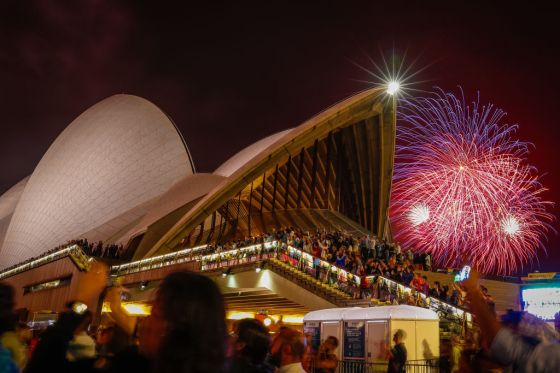
Sixteen hours ahead of New York, the clock struck midnight and a new decade began in Australia at 8 a.m. EST Fireworks lit up the sky behind the Sydney Opera House.

Australians Celebrate New Year's Eve 2019
Hanna Lassen—Getty ImagesFireworks explode over the Sydney Harbour Bridge and Sydney Opera House during the midnight display during New Year’s Eve celebrations on January 01, 2020 in Sydney, Australia.

Melbourne, Australia

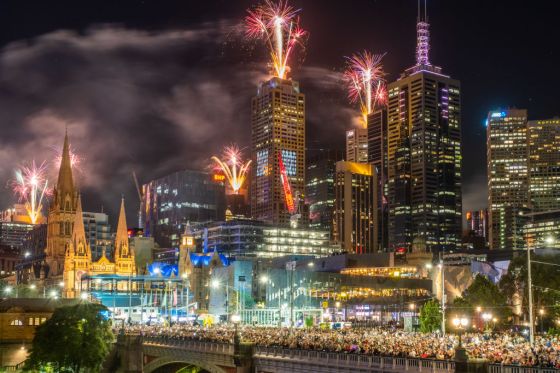
Southwest of Sydney, the city of Melbourne lit up for 2020 at midnight, too.

Australians Celebrates New Year's Eve 2019
Asanka Ratnayake—Getty ImagesFireworks erupt over the Melbourne central business district during New Year’s Eve celebrations on January 01, 2020 in Melbourne, Australia.

Tokyo, Japan

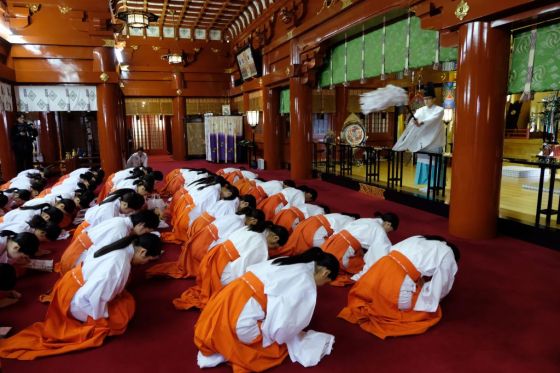
The decade began in Japan at 10 a.m. EST The new year is special in Japanese culture as it is considered a time to pray for one’s family.

JAPAN-NEW YEAR
Kazuhiro Nogi—AFP/Getty ImagesJapanese priestess prepare for New Year prayers at Kanda Myojin Shrine in Tokyo on December 31, 2019. Millions of Japanese people will visit shrines and temples across the country during the first three days of the new year to pray for the well-being of their families.

Seoul, South Korea

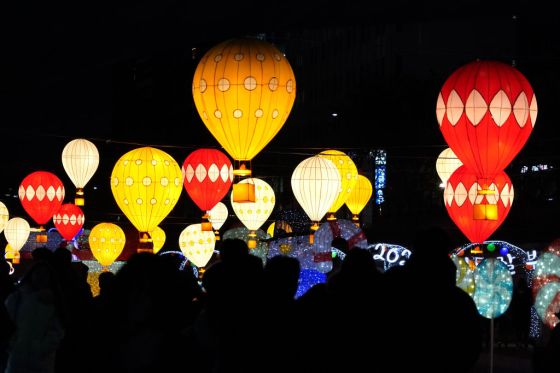
Lanterns were lit up in Seoul to mark the new decade at 10 a.m. EST.

South Koreans Countdown To The New Year
Chung Sung-Jun—Getty ImagesPeople gather to celebrate New Years on December 31, 2019 in Seoul, South Korea.

Hong Kong

Hong Kong’s pro-democracy protest movement didn’t slow down for New Year’s Eve, where the new year began at 11 a.m. EST.

Final Pro-Democracy Protests of 2019 in Hong Kong
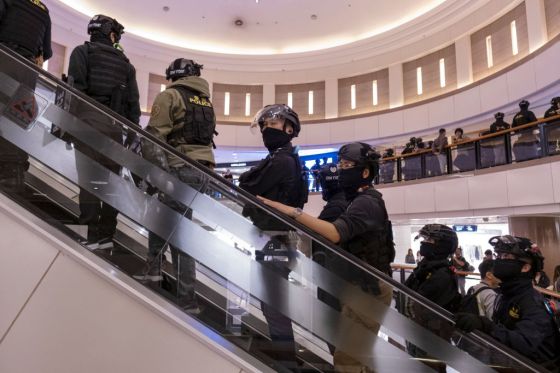
Justin Chin—BloombergRiot police ride an escalator as they patrol the Harbour City shopping mall in the Tsim Sha Tsui district of Hong Kong, China, on Tuesday, Dec. 31, 2019.

Singapore

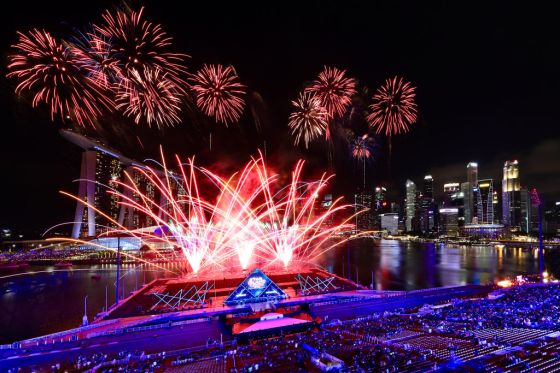
Fireworks at Marina Bay drew huge crowds in Singapore, when the day changed at 11 a.m. EST.

Singapore Celebrates New Year's
Suhaimi Abdullah—Getty ImagesSingapore awaits 2020 with curtain-raiser fireworks by Star Island as revellers join in the biggest countdown celebration at Marina Bay on December 31, 2019 in Singapore.

Bangkok, Thailand

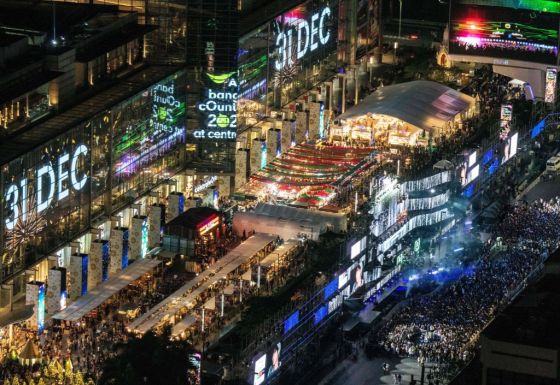
12 hours ahead of New York, the new year was counted down in Bangkok outside of a shopping mall at 12 p.m. EST.


THAILAND-NEW YEAR
Mladen Antonov—AFP/Getty ImagesRevelers arrive early to watch the New Year countdown outside a shopping mall in downtown Bangkok on December 31, 2019.

New world news from Time: Protesters Shouting ‘Death to America’ Stormed the U.S. Embassy Compound in Baghdad. Here’s a Timeline of What’s Happened So Far


Protesters shouting “Death to America,” stormed the U.S. Embassy compound in Baghdad on Tuesday, setting fires, scrawling anti-American graffiti and planting flags for Iran-backed militia groups.

The protest is reportedly in response to a series of U.S. airstrikes that killed 25 militia fighters on Sunday. The strike was in retaliation for a rocket strike on an Iraqi military compound that killed a U.S. defense contractor and injured U.S. and Iraqi service members.

As Iraqi security forces did not attempt to stop the protesters, the storming of the Embassy could heighten concern about the relationship between the United States and Iraq, especially amid heightened tensions between the U.S. and Iran. About 5,000 U.S. troops are still stationed in Iraq, and some of the Iranian-backed militia wants them withdrawn, according to the Associated Press.

Iraq is already in the midst of a tumultuous period. Since October, more than 450 people have been killed in mass protests criticizing the country’s poor quality of life and demanding new electoral laws and accountability for corruption. In November, Adel Abdul-Mahdi announced he would resign as Prime Minister of the country after weeks of violent protests.

Here is how events have unfolded since the death of the U.S. contractor.

Friday, Dec. 27: U.S. Defense Contractor Killed in Rocket Attack in Iraq

A U.S. defense contractor was killed in an attack on an Iraqi military compound near Kirkuk, Iraq, according to the Associated Press. The attack also injured four U.S. service members and two Iraqi Security Forces members, according to the Department of Defense. As many as 30 rockets were fired in the attack.

The U.S. blamed the Iranian-backed militia for the assault. On Monday, the group denied responsibility for the Dec. 27 attack through a spokesperson, according to the New York Times.

Several other similar attacks have occurred over the past few months, according to the Associated Press.

Sunday, Dec. 29: U.S. Strikes kill 25 militia members

The U.S. conducts air strikes on five sites of Kataeb Hezbollah, an Iran-backed militia, according to the Department of Defense. The U.S. indicated that the strikes were in retaliation for the rocket attack. The attack killed 25 fighters, according to the Associated Press.

“The U.S. and its coalition partners fully respect Iraqi sovereignty, and support a strong and independent Iraq. The U.S., however, will not be deterred from exercising its right of self-defense,” Assistant to the Secretary of Defense Jonathan Hoffman said in a statement. He called on Iran and the militias to stop attacking U.S. and coalition forces.

The Iraqi government expressed outrage about the attack, calling it a “flagrant violation” of its sovereignty, according to the Associated Press.

Monday, Dec. 30: Iraq Expresses Outrage After Airstrike

Speaking to cabinet members, Prime Minister Adel Abdul-Mahdi declared three days of mourning for the people killed in the strikes, according to the Associated Press. He said that he had attempted to stop the U.S. airstrike, but the U.S. had insisted.

Tuesday, Dec. 31: Protesters Break into the U.S. Embassy Compound

After a funeral for fighters killed in the airstrikes, protesters broke into the U.S. Embassy compound in Baghdad.

Protesters gathered outside the compound shouting “Death to America!” and “Death to Israel!” and started to throw water and stones over its walls. They smashed through a main door, set a reception area on fire, and covered the embassy wall with militia flags and anti-U.S. graffiti, and planting flags above the reception area according to the Associated Press. Many were wearing militia uniforms, according to the Associated Press.

The Iraqi security forces didn’t try to stop the protesters, permitting them to pass a security checkpoint, according to the Associated Press.

Commanders from militias that support Iran joined the protest outside the embassy, the Associated Press reported.

After the breach, Secretary of Defense Mark T. Esper said in a statement that additional forces are being sent to support the embassy. He also called on Iraq to help protect the facility.

“As in all countries, we rely on host nation forces to assist in the protection of our personnel in country, and we call on the Government of Iraq to fulfill its international responsibilities to do so,” Esper said.

President Trump blamed Iran for the contractor’s death and the storming of the U.S. Embassy on Twitter.

“They will be held fully responsible,” Trump wrote. “In addition, we expect Iraq to use its forces to protect the Embassy, and so notified!”

White House press secretary Stephanie Grisham reaffirmed the President’s position in a a statement to the Associated Press

“As the president said, Iran is orchestrating this attack and they will be held fully responsible,” Grisham said. “It will be the president’s choice how and when we respond to their escalation.”

On Tuesday afternoon, President Trump declared on Twitter that the Embassy is “safe” and that U.S. personnel had rushed to the scene.

New world news from Time: Afghanistan Faces a ‘Make-or-Break Moment,’ U.N. Chief Says

UNITED NATIONS — Warning that Afghanistan is facing “a make-or-break moment,” the United Nations chief on Monday urged the world t...